
China's First Automaker Initiates Level 3 Autonomous Driving Tests
BAIC and Huawei have launched road tests of an autonomous driving system on intercity highways. The Stelato V8 is approved for trials at speeds up to 120 km/h.
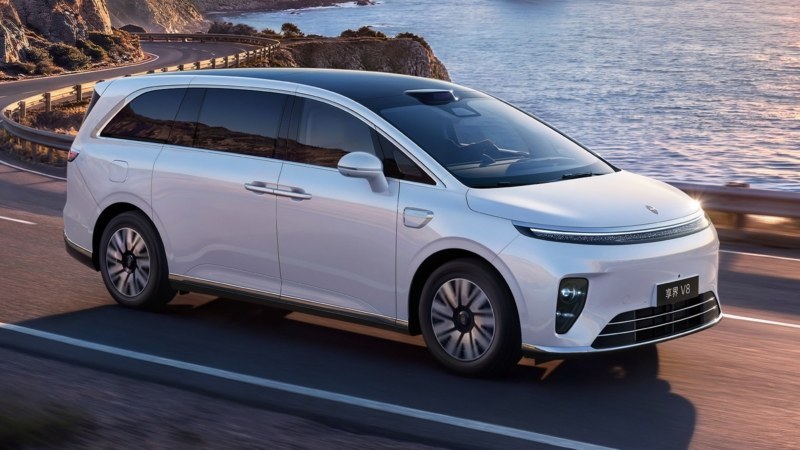
BAIC, in partnership with Huawei, has deployed the Stelato V8 for testing a Level 3 autonomous driving system. The trials are taking place on intercity highways and are intended to accelerate the widespread adoption of Level 3 autonomy in China.
Under Level 3 mode, the driver may temporarily refrain from monitoring the road and controlling the vehicle, but only within conditions specified by the system: the vehicle assumes responsibility for driving during this period. Prior to real-world road tests, the minivan underwent validation through computer simulations and closed proving grounds.
Developers tested the system’s recognition of stationary vehicles in the lane, slow-moving traffic, and sudden braking ahead. The Stelato V8 can autonomously change lanes, reduce speed before highway exits, and continue driving at night, as well as in light or moderate rain or snow.

The vehicle is equipped with Huawei’s Qiankun ADS 5.0 system, comprising 38 sensors, including four lidars. The roof-mounted lidar has a resolution of 896 lines.
Previously, conditional permits for operating Level 3 vehicles in China were granted to BAIC and Changan, followed by Xpeng, Li Auto, BYD, and Avatr. National standards for Level 3 and Level 4 autonomous driving systems are scheduled to come into force on July 1, 2027.