
How Lexus and Toyota Engines Differ: A Detailed Model-by-Model Breakdown
Most Lexus and Toyota models use shared engines but differ in tuning and equipment. Lexus has its own powerplants for flagship and sports cars.
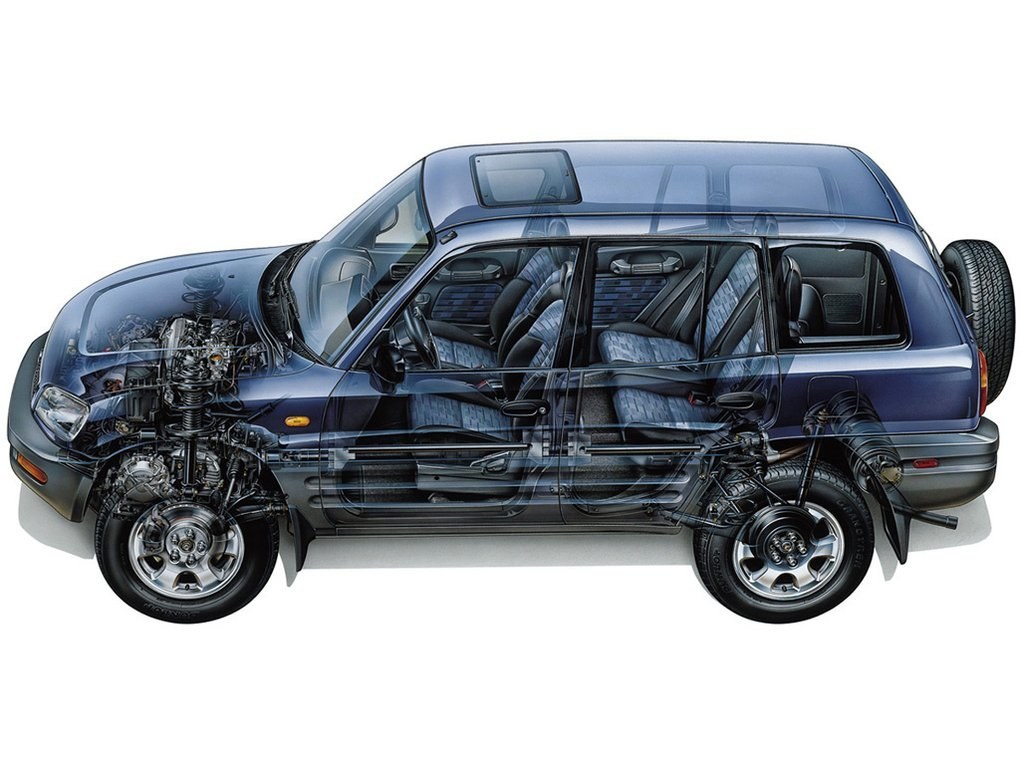
Toyota extensively employs shared technical architectures across its brands, so many Lexus models receive the same basic powertrains as Toyota vehicles. The differences arise from tuning and equipment: each brand and model may feature its own engine control unit calibrations, while Lexus enhances shared engines with improved sound insulation, higher-quality materials, and proprietary suspension settings.
One example is the hybrid naturally aspirated 2.5-litre four-cylinder engine. It is used in the Toyota RAV4 and Lexus NX 350h, as well as the Toyota Camry and Lexus ES 350h. The turbocharged 2.4-litre engine is fitted to the Toyota Grand Highlander and Lexus TX 350. The 3.4-litre twin-turbo V6 is designed for the full-size Toyota Tundra and Sequoia, as well as the body-on-frame Lexus GX and LX. The naturally aspirated 3.5-litre V6 has been used for years in the Toyota Highlander and Sienna, as well as the Lexus IS, ES, and RX.
Lexus also has powertrains that are not found in Toyota models. For the discontinued LFA supercar, a high-revving naturally aspirated 4.8-litre V10 was developed with Yamaha’s involvement. In Japan, it was hand-assembled under the "Takumi" principle: each of the 500 units received an engine that a single engineer built and personally approved from start to finish.
Another Lexus-specific engine is the recently retired 5-litre V8 2UR-GSE. It was installed in the IS F, RC F, GS F, and LC 500. Toyota developed a new 4-litre twin-turbo V8 for a hybrid powertrain and reserved it for the flagship GR GT supercar. The successor to the LFA will be electric.